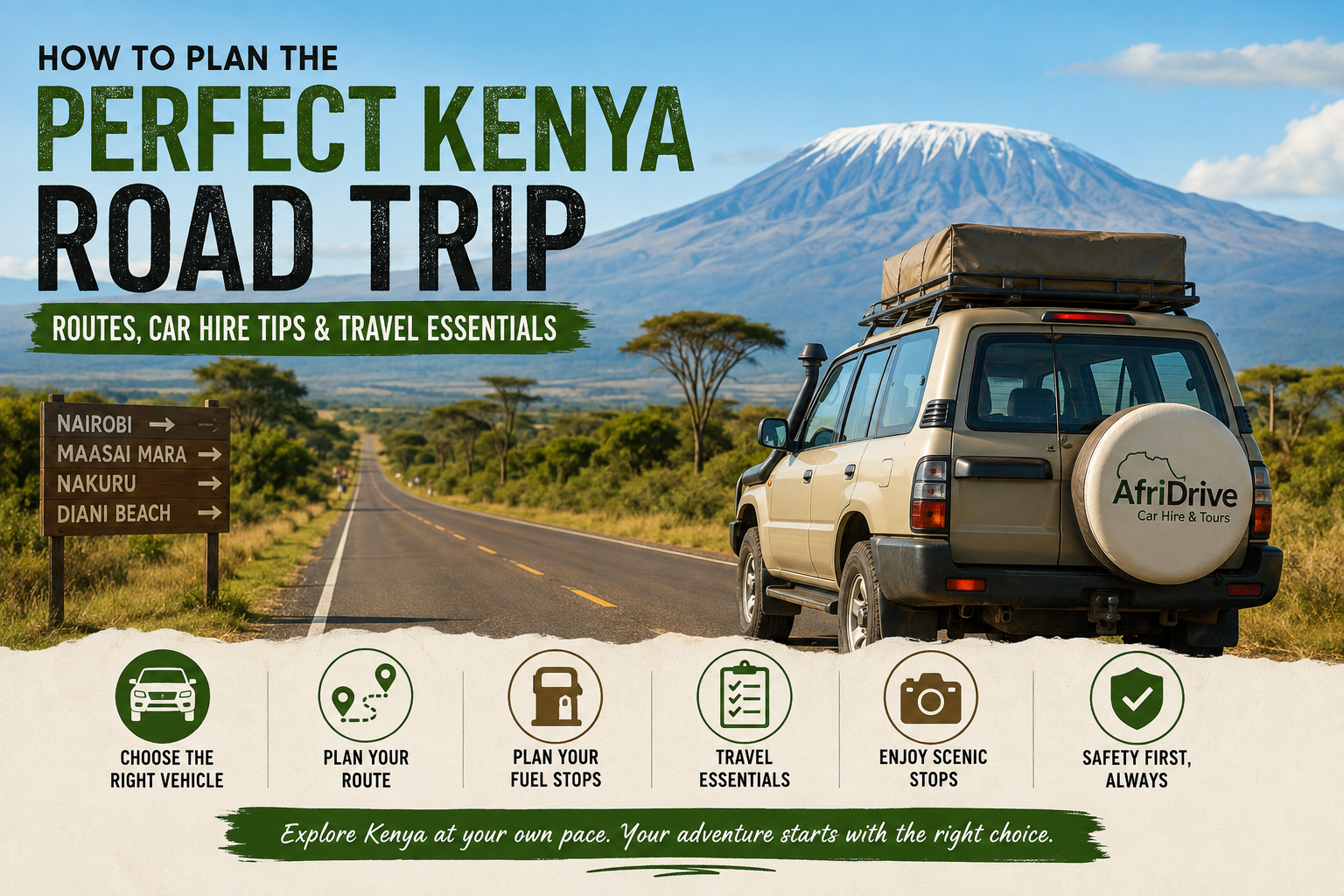
Kenya is one of Africa’s most rewarding countries to explore by road. From the busy streets of Nairobi to the peaceful shores of the Indian Ocean, a road trip gives you the freedom to experience Kenya at your own pace.
You can stop for photographs when you want, discover places that are not always included in traditional tour packages, and build an itinerary around the experiences that matter most to you.
But a successful Kenya road trip requires more than simply hiring a car and getting on the road. Choosing the right vehicle, planning your route, understanding driving conditions and preparing for different terrains can make the difference between a stressful journey and an unforgettable adventure.
Here is how to plan your next Kenya road trip.
Why Explore Kenya by Road?
Kenya has an impressive variety of landscapes within relatively short distances.
A single journey can take you from Nairobi's urban environment to the Great Rift Valley, through highland scenery, around freshwater lakes and eventually toward the coast.
Travelling by road also gives you flexibility.
Instead of following a fixed schedule, you can decide when to leave, where to stop and how long to spend at each destination.
For families, couples, groups of friends, photographers, business travellers and adventure seekers, hiring a vehicle can therefore be a convenient way to explore the country.
1. Choose Your Destinations Before Hiring a Car
Your planned destinations should influence the vehicle you choose.
For example, a trip focused on Nairobi, Naivasha and Nakuru may require a different vehicle from an extended safari through remote areas.
Popular road-trip destinations include:
- Nairobi
- Naivasha
- Nakuru
- Maasai Mara
- Amboseli
- Nanyuki
- Samburu
- Tsavo
- Diani
- Watamu
- Malindi
- Mombasa
You don't necessarily need to visit all of them during one trip.
A better approach is to choose a few destinations and give yourself enough time to enjoy each location rather than spending most of your holiday behind the wheel.
2. Select the Right Rental Vehicle
One of the biggest mistakes travellers make is choosing a vehicle based only on the rental price.
Think about where you are going, how many people are travelling and how much luggage you will carry.
A compact car can be suitable for city travel and ordinary highways. An SUV may be more comfortable for longer journeys, while a capable 4x4 can be more appropriate for challenging terrain and certain safari routes.
Consider:
- Number of passengers
- Amount of luggage
- Road conditions
- Distance to be travelled
- Fuel consumption
- Ground clearance
- Transmission type
- Availability of air conditioning
- Whether you need additional equipment
AfriDrive offers different categories of vehicles, including economy cars, SUVs and safari-oriented 4x4 vehicles, allowing travellers to select a vehicle according to their journey.
3. Don't Underestimate Kenyan Distances
Looking at a map can sometimes make destinations appear closer than they actually are.
Traffic around Nairobi can significantly affect journey times, while road conditions and stops can add additional time to a trip.
Instead of creating an itinerary packed with destinations, allow room for unexpected delays.
A relaxed schedule is particularly important when travelling with children or when driving long distances.
Try to avoid planning several major activities immediately after a long drive.
4. Start Your Journey Early
Starting early can make a major difference, especially when leaving Nairobi.
Morning departures can help you avoid some traffic congestion and give you more daylight for your journey.
Early starts are also useful for travellers heading toward destinations where wildlife activities or scheduled check-ins are involved.
If you are travelling long distance, plan fuel and rest stops in advance.
5. Understand the Difference Between City Driving and Safari Driving
Driving around Nairobi is very different from driving through a national park or remote rural area.
Urban driving requires awareness of traffic, pedestrians, motorcycles, cyclists and busy intersections.
Safari driving introduces another set of challenges, including uneven surfaces, mud, dust, loose gravel and limited mobile connectivity in some areas.
This is why choosing a vehicle based on your destination is so important.
If your itinerary includes challenging terrain, ask your car-hire provider which vehicle is appropriate before confirming your booking.
6. Check the Vehicle Before You Leave
Before accepting a rental vehicle, inspect it carefully.
Check:
- Tyres
- Spare wheel
- Brakes
- Lights
- Indicators
- Windscreen
- Mirrors
- Seat belts
- Air conditioning
- Fuel level
- Existing scratches or dents
Take photographs or videos of the vehicle before departure and ensure any existing damage is recorded in the rental documentation.
Also confirm the emergency contact details of your rental company.
A reliable rental provider should make it clear what you should do if the vehicle develops a mechanical problem during your journey.
7. Plan Your Fuel Stops
Do not wait until the fuel gauge is almost empty before looking for a petrol station.
On major highways and around larger towns, fuel stations are generally easier to find. However, once you move into remote areas, the distance between services can increase.
For longer road trips, identify suitable refuelling points before leaving.
Keeping the tank adequately fuelled is particularly important when travelling into remote safari destinations.
8. Keep Navigation Options Available
Google Maps and other navigation applications can be extremely useful, but don't depend entirely on an internet connection.
Download important maps where possible and keep your route information available offline.
It is also useful to have:
- Your accommodation details
- Emergency contacts
- Vehicle rental contacts
- Important booking confirmations
- Alternative route information
If you are travelling into areas with limited network coverage, tell someone your planned route and expected arrival time.
9. Pack for More Than One Type of Weather
Kenya's climate varies considerably between regions and elevations.
You might leave Nairobi wearing a light jacket and later find yourself in a much warmer coastal environment.
For a road trip, consider packing:
- Comfortable clothing
- A light jacket
- Comfortable walking shoes
- Sun protection
- Sunglasses
- Hat
- Reusable water bottle
- Phone charger
- Power bank
- Basic toiletries
- Necessary travel documents
If you're heading on safari, neutral-coloured clothing can also be practical for outdoor activities.
10. Don't Forget Travel Documents
Before collecting your rental vehicle, confirm that you have all required documents.
Depending on your circumstances and rental agreement, these may include identification, a valid driving licence and booking information.
International travellers should also verify any additional driving requirements applicable to them before travelling.
Always discuss documentation requirements with your car-hire company before your journey.
11. Build Time for Unexpected Stops
Some of the best moments on a Kenya road trip may not be on your original itinerary.
You might discover an interesting viewpoint, local restaurant, roadside market or scenic location that you want to explore.
Give yourself some flexibility.
A road trip should not feel like a race from one destination to another.
Allowing extra time can make the experience considerably more enjoyable.
12. Think About Where You Will Stay
Accommodation should be planned around your driving itinerary.
If you are travelling long distances, consider staying overnight rather than attempting to complete an exhausting journey in one day.
For safari trips, staying close to your next day's activities can also reduce unnecessary driving.
AfriDrive's trip logistics service includes assistance with route planning and accommodation arrangements, which can be useful for travellers who want their transport and itinerary coordinated together.
13. Keep Safety at the Centre of the Journey
A great road trip is one where you arrive safely at every destination.
Avoid driving when extremely tired and take regular breaks during long journeys.
Keep valuables out of sight, lock the vehicle when leaving it and remain aware of your surroundings.
When driving in unfamiliar areas, follow local road signs and avoid taking unnecessary risks.
If you are unsure about a route or road condition, ask your rental provider or local travel professional for advice.
14. Consider Self-Drive or Chauffeur Services
Not every traveller wants to drive.
Some people prefer the independence of self-drive, while others would rather sit back and enjoy the scenery.
Self-drive can provide flexibility for experienced drivers who want to create their own itinerary.
A chauffeur-driven vehicle, meanwhile, can be useful for visitors who are unfamiliar with Kenyan roads, corporate travellers with busy schedules, families or groups that simply want to relax.
The best option depends on your itinerary, comfort level and personal preferences.
Example Kenya Road Trip Itinerary
If you have approximately one week, you could consider an itinerary such as:
Day 1 – Nairobi
Arrive, settle into your accommodation and explore selected Nairobi attractions.
Day 2 – Nairobi to Naivasha
Drive through the Great Rift Valley and spend the night around Lake Naivasha.
Day 3 – Naivasha to Nakuru
Explore the area around Lake Nakuru and enjoy the surrounding scenery.
Day 4 – Nakuru to Maasai Mara
Travel toward the Maasai Mara and settle into your accommodation.
Day 5 – Maasai Mara
Reserve the day for wildlife viewing and exploring the reserve.
Day 6 – Maasai Mara to Nairobi
Return toward Nairobi, allowing sufficient time for the journey.
Day 7 – Nairobi
Enjoy your final day in the city before departure.
This is only an example. Your ideal route should depend on your available time, interests and budget.
What Makes a Good Kenya Car-Hire Company?
Price is important, but it should not be the only consideration.
Before booking, look for a company that provides:
- Well-maintained vehicles
- Clear rental terms
- Transparent pricing
- Responsive customer support
- Emergency assistance
- Appropriate insurance
- Reliable vehicle handover
- Flexible rental options
- Local route knowledge
A company that understands the local roads and destinations can also provide valuable advice when planning a long-distance trip.
AfriDrive provides car hire alongside airport transfers, trip logistics and other mobility services in Kenya, giving travellers the option of arranging several parts of their journey through one provider.
Your Kenyan Adventure Starts With the Right Vehicle
Kenya is best experienced at your own pace.
Whether you're planning a weekend escape from Nairobi, a family holiday, a business trip, a safari adventure or a longer cross-country journey, the right vehicle can make your experience more comfortable and convenient.
The key is to plan ahead.
Choose your destinations, select a vehicle suited to your route, prepare for changing road and weather conditions, allow enough time for each journey and keep safety at the centre of your plans.
With the right preparation, the road itself becomes part of the adventure.
Ready to Explore Kenya?
If you're planning a Kenya road trip and need a reliable vehicle, AfriDrive Car Hire & Tours provides a range of rental options, including economy cars, SUVs and 4x4 vehicles. The company also offers airport transfers and trip logistics support for travellers visiting Kenya.
Book your vehicle, plan your route and get ready to discover Kenya on your own terms.
Comments
0Leave a Comment
We'd love to hear your thoughts
No comments yet
Be the first to share your thoughts and join the conversation!